
Uncategorized
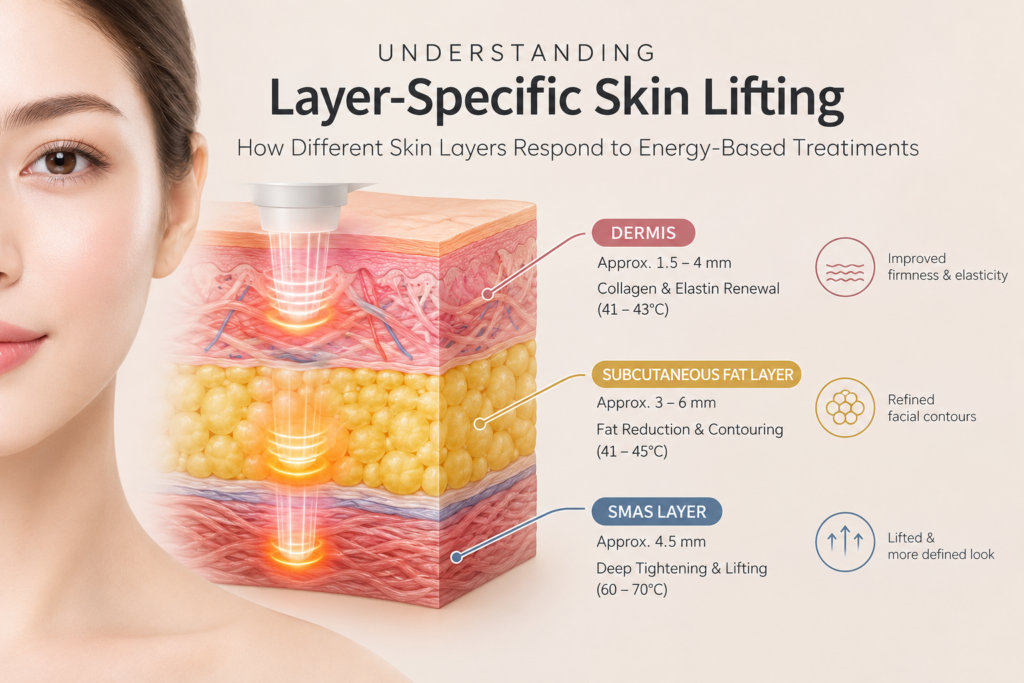
Understanding Layer-Specific Skin Lifting: How Different Skin Layers Respond to Energy-Based Treatments
Oct
OVERVIEW: The Key to Lifting
Where and How Is Heat Delivered?
In aesthetic practice, professionals use a variety of techniques and technologies to improve facial contours and skin firmness, including massage tools such as gua sha, manual techniques, radiofrequency (RF), ultrasound, and EMS devices.
When performing energy-based lifting treatments, understanding the target tissue and how energy interacts with different skin layers is just as important as knowing how to operate the device.
Lifting is not a one-size-fits-all treatment. Different skin layers may require different approaches depending on the client’s primary concern.
- Dermis: When the primary concern is reduced skin firmness and elasticity.
- Subcutaneous fat layer: When excess or unevenly distributed facial fat contributes to changes in facial contours.
- SMAS (Superficial Musculoaponeurotic System): When laxity in the deeper supporting structures contributes to overall facial sagging.
Not every client needs treatment targeting all three layers. The appropriate approach depends on the individual’s facial anatomy, skin condition, and treatment goals.
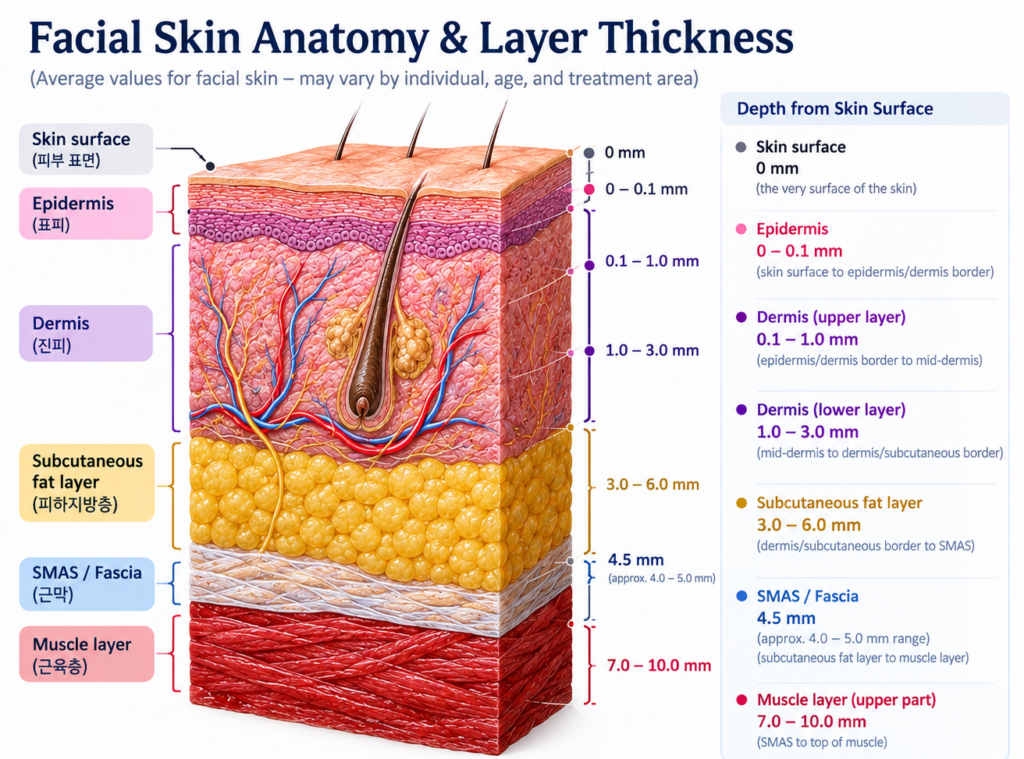
Take a look at the skin cross-section diagram below to identify the location of each layer.
Please note: The depth measurements shown are approximate reference values for the face. Actual tissue depth varies by facial area, individual anatomy, and age.
Thermal Responses and Effects by Skin Layer
-
The Dermis | Approximate Depth: 1.5–4 mm
Primary target: Collagen remodeling and improved skin elasticity
Illustrative temperature range: 41–43°C
The dermis contains a dense network of collagen and elastin fibers that help maintain skin structure, firmness, and elasticity.
When controlled thermal energy is delivered through technologies such as radiofrequency (RF), it can trigger a wound-healing response and stimulate collagen remodeling. The exact thermal response depends on the device, energy settings, treatment duration, and tissue characteristics.
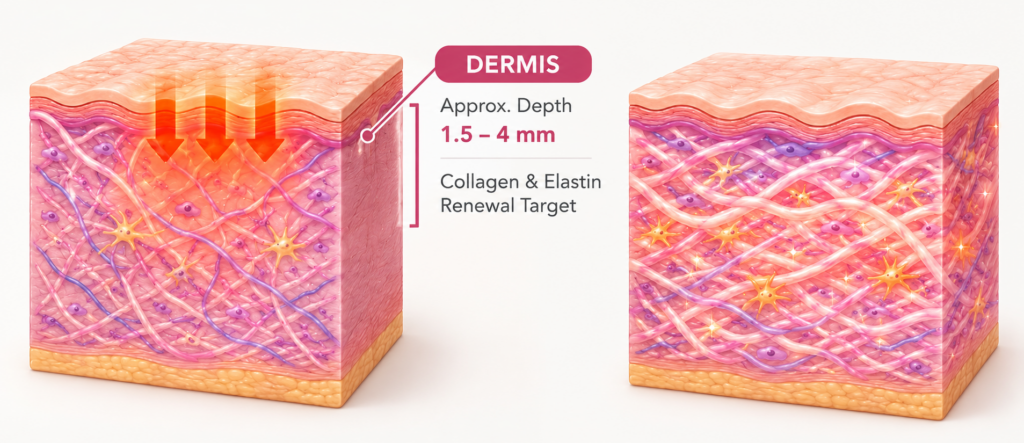
The general process:
Controlled thermal stress → Fibroblast activation → New collagen production → Collagen remodeling
Following treatment, collagen remodeling takes place gradually over time. As the skin’s structural proteins are renewed, improvements in firmness and elasticity may become more noticeable.
What Happens Inside the Skin?
The tissue response generally progresses through several stages:
- Initial tissue response: Temporary tissue stress, swelling, and an inflammatory response may occur.
- Fibroblast activation: Cells involved in tissue repair become more active.
- Collagen production: New collagen synthesis increases as part of the healing process.
- Collagen remodeling: Collagen fibers reorganize and mature over the following weeks and months.
- Long-term changes: The results evolve over time and depend on individual healing responses, aging, and other factors.
💧 Why Can Skin Feel Dry After Treatment?
After an RF treatment, some clients may experience temporary dryness, tightness, or increased skin sensitivity.
Depending on the intensity of the treatment, thermal stress may temporarily affect the skin barrier and its ability to retain moisture. Transepidermal water loss (TEWL) may also increase when the barrier is compromised.
Because the skin’s recovery process requires an intact moisture barrier, appropriate aftercare is essential.
For the first week after treatment, encourage clients to maintain adequate hydration and use gentle, barrier-supporting skincare products.
Recommended skincare ingredients:
- Hyaluronic Acid: Helps attract and retain moisture.
- Ceramides: Support the skin’s natural moisture barrier.
- Panthenol (Pro-Vitamin B5): Helps soothe and condition the skin.
- Glycerin: A humectant that attracts moisture.
- Squalane: Helps soften the skin and reduce moisture loss.
Recommended products: Add selected post-treatment moisturizers and barrier-supporting products here.


-
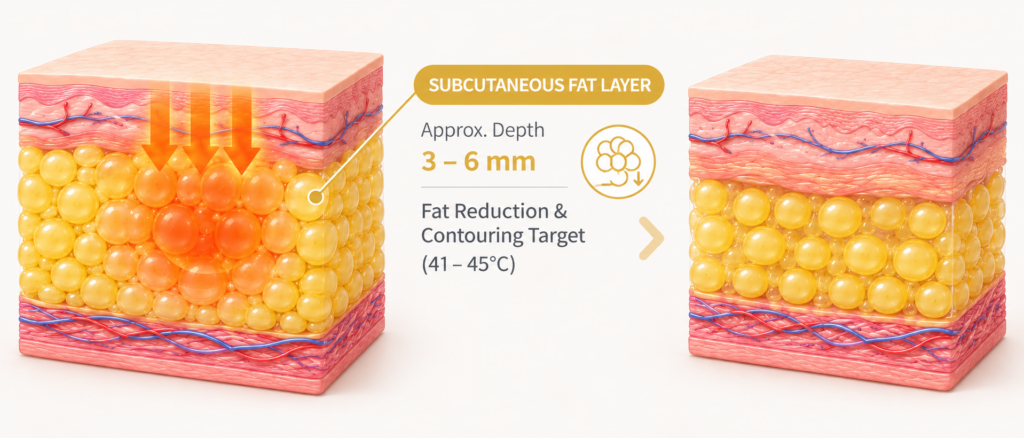
The Subcutaneous Fat Layer | Approximate Depth: 3–6 mm
Primary target: Facial contouring and, with appropriate technologies, localized fat reduction
Illustrative temperature range: 41–45°C
Unlike the skin’s superficial layers, adipose tissue responds differently to thermal exposure. However, the effect of heat on fat cells depends on the type of technology used, the delivered energy, exposure time, and treatment protocol.
With certain energy-based technologies, controlled heating can affect adipose tissue and, when specifically designed and clinically validated for that purpose, may contribute to localized fat reduction.
The effects are not determined by temperature alone. Energy delivery, treatment depth, tissue characteristics, and device-specific parameters all play important roles.
❔ Why Does One Client Experience Improved Contours While Another Develops Hollowing?
Facial fat plays a dual role: it can contribute to heaviness or fullness in some areas, but it also provides essential volume and structural support.
Every client has a different distribution of facial fat, with variations in its amount, depth, thickness, and location. Individual tissue responses to energy-based treatments also vary.
Excessive or inappropriate treatment of facial fat may contribute to unwanted volume loss or a hollow appearance, particularly in areas where fat provides important facial support.
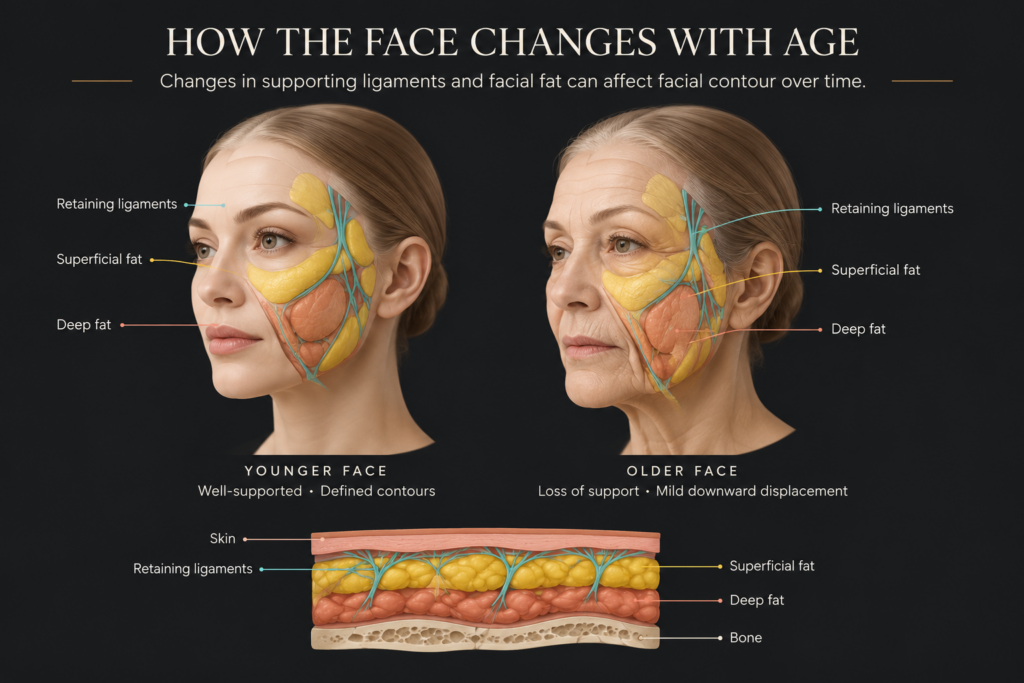
The key takeaway: Effective facial contouring requires an understanding of facial anatomy and careful selection of the treatment approach. Reducing fat is not always the same as achieving a more lifted appearance.
-
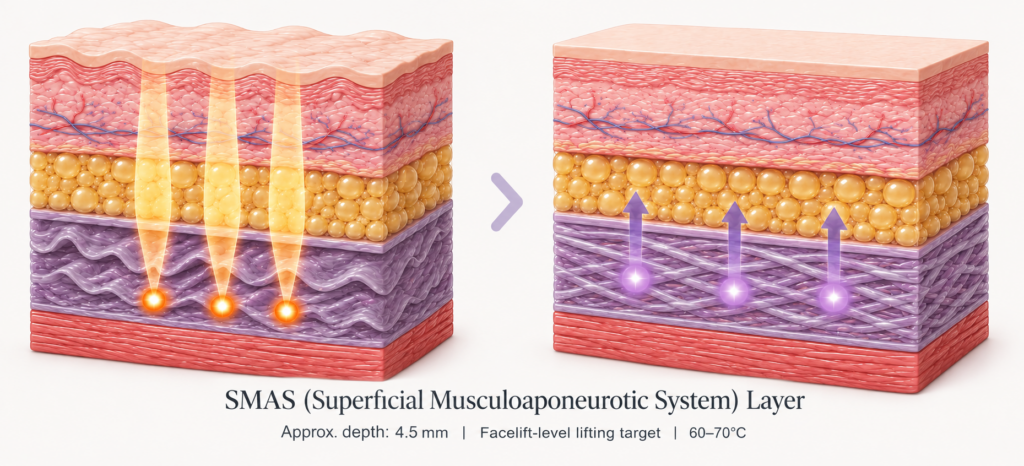
The SMAS Layer | Approximate Depth: 4.5 mm
Primary target: Deep tissue tightening and lifting
Illustrative thermal range: Approximately 60–70°C at localized treatment points in certain HIFU protocols
The Superficial Musculoaponeurotic System (SMAS) is a fibromuscular connective tissue network that plays an important role in supporting facial soft tissues.
Certain high-intensity focused ultrasound (HIFU) technologies deliver focused energy to selected depths beneath the skin, creating localized thermal coagulation zones.
These controlled thermal effects can cause localized tissue contraction and initiate a wound-healing response that includes collagen remodeling. Depending on the technology and treatment protocol, these changes may contribute to a firmer appearance and improved facial contours.
The thermal effect occurs at the focal point rather than uniformly throughout the entire tissue layer. Actual treatment depth and temperature depend on the specific device and its operating parameters.
💡 Why Does the SMAS and Supporting Tissue Become Less Firm Over Time?
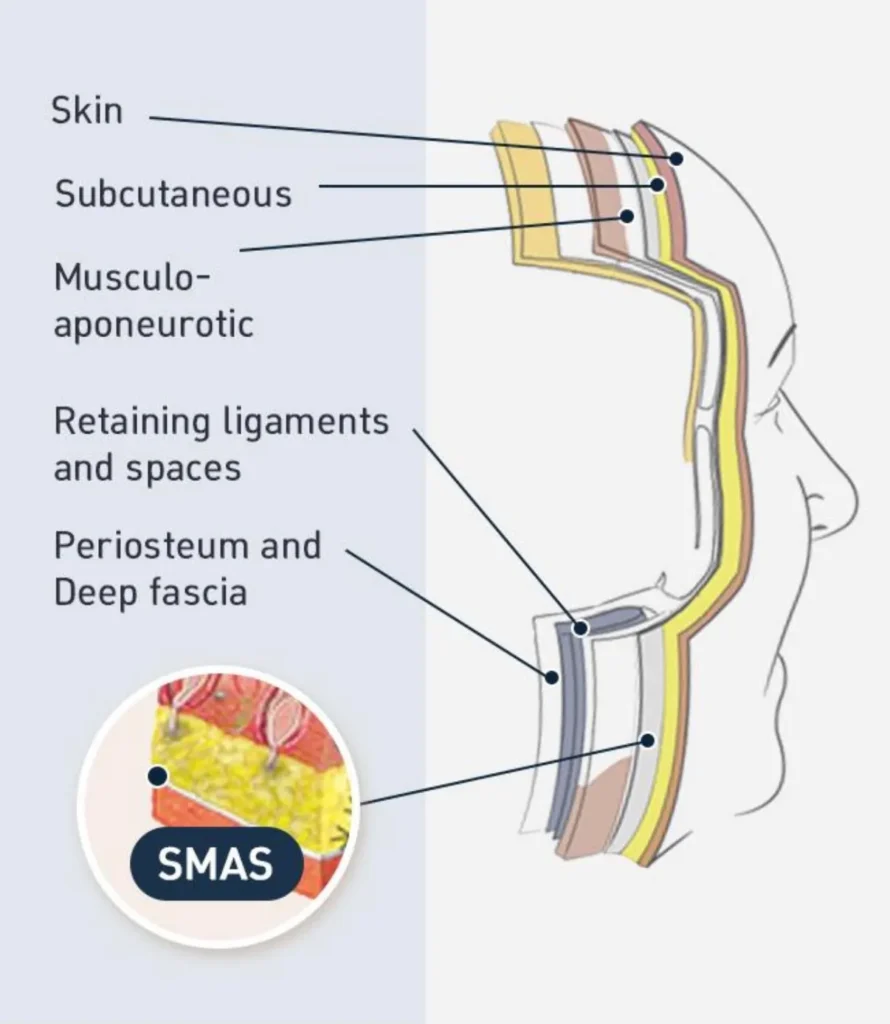
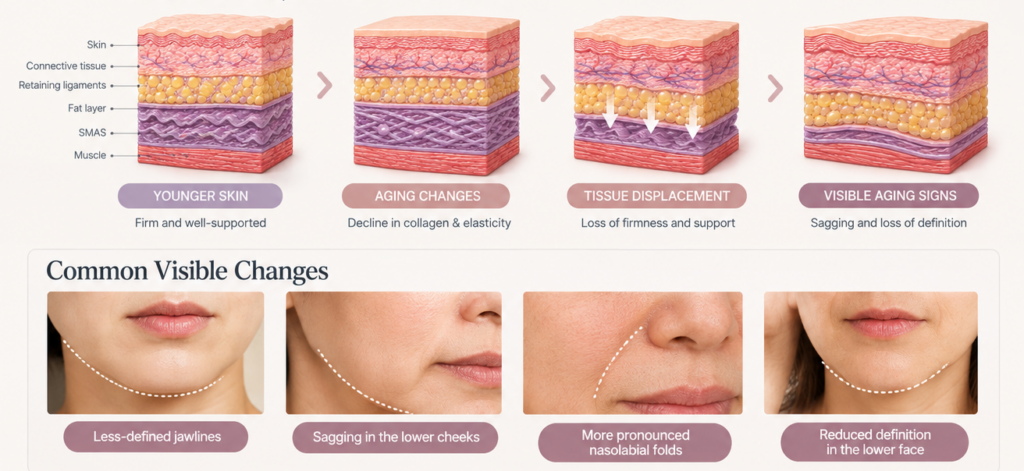
As we age, changes occur in the skin, connective tissue, retaining ligaments, and other supporting structures of the face.
Collagen production gradually declines, existing collagen fibers change, and the elasticity of supporting tissues may decrease. These changes can contribute to the downward displacement of facial soft tissues.
Common visible changes include:
- Less-defined jawlines
- Sagging in the lower cheeks
- More pronounced nasolabial folds
- Reduced definition in the lower face
Certain HIFU treatments aim to create controlled thermal coagulation zones at selected tissue depths. The resulting tissue contraction and subsequent collagen remodeling may help improve the appearance of skin laxity.
Why Do Different Clients Get Different Results From the Same Treatment?
Depth measurements found in textbooks and device manuals are reference values, not universal measurements for every face.
Each person’s facial anatomy is unique. Three major factors help explain why the same treatment settings may produce different outcomes.
1. Differences in Facial Fat Distribution
Some clients have fuller cheeks, while others have very little subcutaneous fat.
Because the thickness of the fat layer varies, energy delivered at the same nominal depth may interact with different tissues in different clients.
This is especially important when selecting treatments intended to improve facial contours without compromising natural facial volume.
2. Differences in Tissue Thickness and Depth
Age, genetics, facial anatomy, and other individual characteristics influence the thickness and location of different tissue layers.
As a result, the same depth setting does not guarantee that energy will interact with precisely the same tissue in every client.
Understanding these anatomical differences is essential when selecting appropriate treatment parameters.
3. Differences in Thermal Response
Even when the same device settings are used, individual skin and tissue responses may vary.
Factors such as age, baseline skin condition, tissue characteristics, healing capacity, and relevant health factors can influence the treatment response.
Consequently, the degree of visible improvement and the time required to see results may differ from one client to another.
💡 The Takeaway for Aesthetic Professionals
The right treatment is not simply about choosing a device or setting a depth. It is about understanding the tissue you intend to target.
Appropriate treatment selection requires consideration of facial anatomy, tissue thickness, the client’s primary concerns, the device’s capabilities, and its safety instructions.
The same number of shots, energy settings, or treatment protocol will not necessarily produce identical results in every client.
A thorough assessment and an individualized approach are essential for supporting safe, effective, and natural-looking outcomes.
※The depth and temperature ranges in this article are approximate examples, not universal treatment recommendations. Actual values and treatment effects vary by device, facial area, and individual anatomy.
Aging skin, wrinkles, sagging skin
-

K-beauty professionals – Pro Tips
www.kbeautyprofessionals.com
